Symbol of the upcoming 250th anniversary of American independence.
Introduction
America’s 250th anniversary will be wrapped in freedom language—flags, fireworks, Founding Father speeches, and the familiar story of independence won by brave men in wigs.
But some of the ink that sealed that freedom was mixed in the Atlantic economy of bondage.
If we follow the money, the Treaty of Paris was not written in a moral vacuum. It was written inside a world financed by rice, credit, and human capture—a story that runs through a slave-trading fort off the coast of Sierra Leone.
In 2026, the United States will celebrate 250 years of independence.
I want to add one more witness to the room:
- Bunce Island.
Because America’s 250th is not only a U.S. anniversary.
It is also a deadline to tell the truth about the people whose lives paid for that freedom.
The Room Where It Happened — and the Coast Behind It
The American Revolution officially ended with the Treaty of Paris in 1783.
In Paris, Richard Oswald, Britain’s lead negotiator, sat across from John Adams, Benjamin Franklin, and John Jay, with Henry Laurens later entering the story on the American side.
Textbooks often freeze the scene there:
- A treaty, a handshake, a new nation.
But looking more closely reveals a deeper story about who two of the key men really were.
Richard Oswald
Richard Oswald was not only a diplomat.
He was also a merchant-investor who owned Bunce Island (Bance Island) in the Sierra Leone River.
From that fort:
- Oswald’s agents forced thousands of Africans onto ships
- ships carried many of them into the Americas
- especially into South Carolina and Georgia
Henry Laurens
Henry Laurens was not only a statesman.
Before becoming President of the Continental Congress, he was a major slave trader and rice planter from South Carolina.
His firm, Austin & Laurens, trafficked Africans into the same plantation world supplied by Bunce Island.
An Ocean Between Them
When Oswald and Laurens moved through this treaty era—directly or indirectly—an ocean already connected them.
Not only as geography.
But as a business model.
Both men’s fortunes were tied to:
- the Rice Coast of West Africa
- regions now known as Sierra Leone
- and the people whose descendants would later be called Gullah Geechee in the Lowcountry.
The Treaty of Paris was signed in Europe.
But the economic system that made it possible was built in places like Bunce Island.
Bunce Island: The Offstage Actor in the American Story
Bunce Island rarely appears on American history timelines.
It should.
From this small island fortress:
- Oswald’s traders imprisoned, branded, and forced captives from the Upper Guinea Coast—including Mende, Temne, Vai, Susu, and others—onto ships.
- Ships transported many of them directly to South Carolina and Georgia.
- Their knowledge of rice cultivation made them extremely profitable in the Lowcountry plantation system.
Their labor and expertise helped build the wealth of men like Henry Laurens—wealth that later translated into political influence and diplomatic power.
America’s Freedom and the Atlantic System
So when the United States celebrates 250 years of independence, part of what is being celebrated—whether acknowledged or not—is a system in which the Atlantic system forced Sierra Leone and West Africa into the role of unpaid partners
America’s freedom did not appear out of thin air.
It grew from:
- land that colonizers seized from Native nations
- labor that planters extracted from African people
Some of those people moved through Bunce Island’s trade networks. The same class of men later remembered as architects of the modern West controlled and monetized every step.
Sierra Leone Was There — Even When It Wasn’t Named
No one at the Treaty of Paris said “Sierra Leone” aloud.
But the Rice Coast was already present in the room:
- in plantation profits that financed careers and reputations
- in enslaved Africans whose labor built the rice wealth of the American South
- in the future Gullah Geechee communities whose culture proves that memory survives even when names are erased
When fireworks rise in 2026, people in the Gullah Geechee Lowcountry and people in Sierra Leone are not merely spectators to someone else’s history.
They are heirs to a chapter that has never been fully told.
Why This Matters for the 250th Anniversary
Some will ask:
“Why dig this up during a celebration? Isn’t that divisive?”
The better question is:
Who has been allowed to celebrate for 250 years with only part of the story?
Acknowledging Sierra Leone’s role does not diminish American independence.
Instead, it clarifies the cost and expands the circle of witnesses.
It reminds us that:
- Freedom for some was built on the unfreedom of others.
- African Americans and Gullah Geechees are connected to specific places along the West African coast, not just the vague phrase “from Africa somewhere.”
- Sierra Leone and the wider African diaspora were central actors in shaping the Atlantic world.
If the 250th anniversary is going to mean anything beyond nostalgia, it must make room for this truth.
A Different Kind of Anniversary
As 2026 arrives, there is another way to mark the date.
In Sierra Leone, remember Bunce Island not only as a site of loss but also as a site of testimony.
For the Gullah Geechee corridor, remember that some of the rice skills, songs, and family lines carried into those swamps originated on the same coast that Oswald profited from.
Across the broader African American community, remember that the struggle for freedom did not begin in 1776 or end in 1783.
It began long before—on both sides of the Atlantic—and it continues today.
Closing Reflection
America’s 250th anniversary will be filled with flags and speeches.
But if the moment is to mean anything beyond nostalgia, we must say what is too often left unsaid.
The Treaty of Paris was signed in Europe.
But the costs of that freedom were paid across the Atlantic—including in Sierra Leone.
So the question remains:
What does a real anniversary look like when the missing co-authors finally get named?
Amadu Massally
Historian & Author
Amadu Massally is a renowned historian specializing in the transatlantic slave trade and the deep historical connections between Sierra Leone and the Gullah Geechee people of the American South.
Discover the untold story of how West African rice shaped the American South.

America’s 250th Anniversary and the Atlantic Ledger
America’s 250th Anniversary and the Atlantic Ledger: Freedom, Rice, and the Hidden Witness of Bunce Island
America at 250
America at 250: How Sierra Leone’s Rice Coast Powered the Treaty of Paris
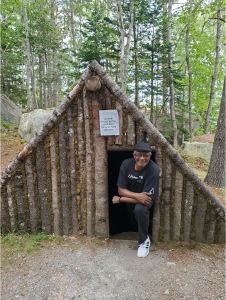
I Entered a Dugout Cabin — And Stepped Into a Story the Textbooks Forgot
I Entered a Dugout Cabin — And Stepped Into a Story the Textbooks Forgot: Where the Cold Kept Memory, and the Earth Spoke Their Names
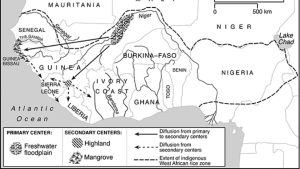
The Rice Coast of West Africa
How West African rice farmers shaped the Carolina Lowcountry and funded America’s founding through centuries of agricultural expertise along the Rice Coast.
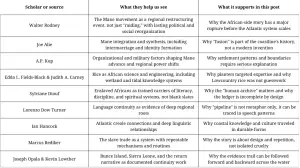
Mali → Mane → Rice Coast: the expertise pipeline predates Carolina.
West African rice expertise traveled from Mali through the Mane migrations to the Rice Coast — long before Carolina planters claimed it as their own.